
S7 · Food-contact Stainless Steel
Food-Contact Stainless Steel (304/316L Media and Boundary List)
List the media, grades, and boundary conditions related to food-contact stainless steel: 4 typical components/processes, including recommended grades, specifications, failure reasons, and standards.
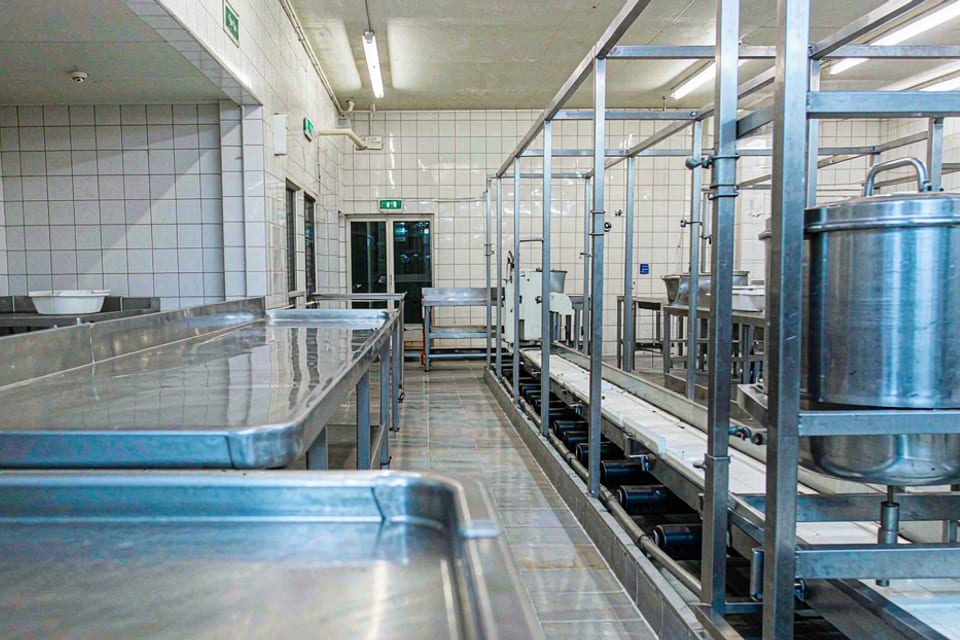
Four Parts and Material List
| Part / Component | Recommended Grade | Size / Thickness | Surface | Main Failure Modes | Reference Standards |
|---|---|---|---|---|---|
| Cookware/Cups/Dishes/Insulated Water Bottles | 304/316/201/430 | 3–1.2mm; Electrolysis/Glazing/2B | Cr≤0.25;Ni≤0.14;Mn≤2.0;Mo≤0.12;As≤0.002;Cd≤0.002;Pb≤0.01;Sb≤0.04mg/kg | Mn migration from 201 is higher than 304; Acidic food and high heat accelerate migration; Rough surface/Welding oxide increase migration | GB 4806.9—2023;GB 4806.1 |
| Sink/Tops/Kitchen Equipment Contact Surfaces | 304/316L | 8–3.0mm; 2B/Dull Finish/Raised Texture | Same as above | Cleaning agents/Food acids/Wear; Weld seams/hidden areas are double risks for migration and microorganisms | GB 4806.9—2023 |
| Commercial Kitchen/Air Scrubbers/Stools | 304 | Hood Body ≥1.2mm; Oil Mesh ≥0.8mm | Contact surfaces follow GB 4806.9; Non-contact surfaces follow structure/fire resistance | Oil stains/High heat/Cleaning agents; Thin-walled hoods sacrifice strength | GB 4806.9—2023;GB 50016 |
| Food Machinery/Pipes/Vessels/Pumps | 304/316L | Ra ≤0.8μm; Welded parts need to be passivated | Cr/Ni/Mn/Mo migration based on contact area/conditions | Welding HAZ promotes localized chromium enrichment; CIP chemicals migrate and accumulate. | GB 4806.9—2023;GB 16798 |
In the table areStandard Configurations.For the same part, different media, temperatures, and welding methods may require switching from 304 to 316L or 2205—clearly stating usage conditions saves more effort than specifying grades directly.
Material Selection Tips
- Common Grades: 304 (4), 316L (2), 316 (1)
- For High Temperatures, Consider 310S / Heat Resistant Castings (2/4).
- In Acidic Media, Start with 316L but Increase to 904L / Dual Phase (2/4).
- Thickness range 0.3–3 mm: Thin plates are mostly formed parts (consider bending rebound and deep drawing cracking), thick plates are mostly welded structural components (consider heat input and sensitization).
Common questions
Food-grade stainless steel: Which type of stainless steel has the highest migration limit according to GB 4806.9—2023?
By total number, the most frequent is 304 (4 items), 316L (2 items), and 316 (1 item). Specific to a part still depends on the medium and temperature; for example, stainless steel countertops that come into contact with salt water should switch from 304 to 316L.
Which parts are most prone to issues?
By failure description, typical examples include "kettles/cups/dishes/insulated cup liners": Manganese migration risk of 201 is higher than 304; acidic food and high temperature accelerate migration; rough surface or weld oxidation increase migration; recommended grades 304/316/201/430, thickness range 0.3–1.2 mm; electrolysis/polishing/2B. For these conditions, it is recommended to specify medium concentration, temperature, and cleaning method in the design phase.
What thickness should I choose?
The listed thickness range is 0.3–3 mm. Thin plates consider forming and surface quality, thick plates consider welding strength and structural integrity; different manufacturers may have different values for the same part, so review your drawings or conditions to confirm.
Related Materials and Adjacent Industries
201Materials and Specifications304Materials and Specifications430Materials and Specifications316LMaterials and SpecificationsStainless Fasteners: A2-70/A4-70/A4-80/D Series and Latest StandardsStainless FastenersWeld Neck Flanges for Seawater Desalination: 2205/2507 Pressure-Temperature-Corrosion BoundariesDuplex Flange & DesalinationSanitary Diaphragm Valves/Clean Valves: ASME BPE, Ra, and Temperature BoundariesSanitary Valves