
S8 · Grade Boundaries by Medium
Boundary for Same Medium (904L/254SMO Media and Boundary List)
List out the media, grades, and boundary conditions related to "Boundary for Same Medium": 5 typical components/processes, including recommended grades, specifications, failure reasons, and standards.
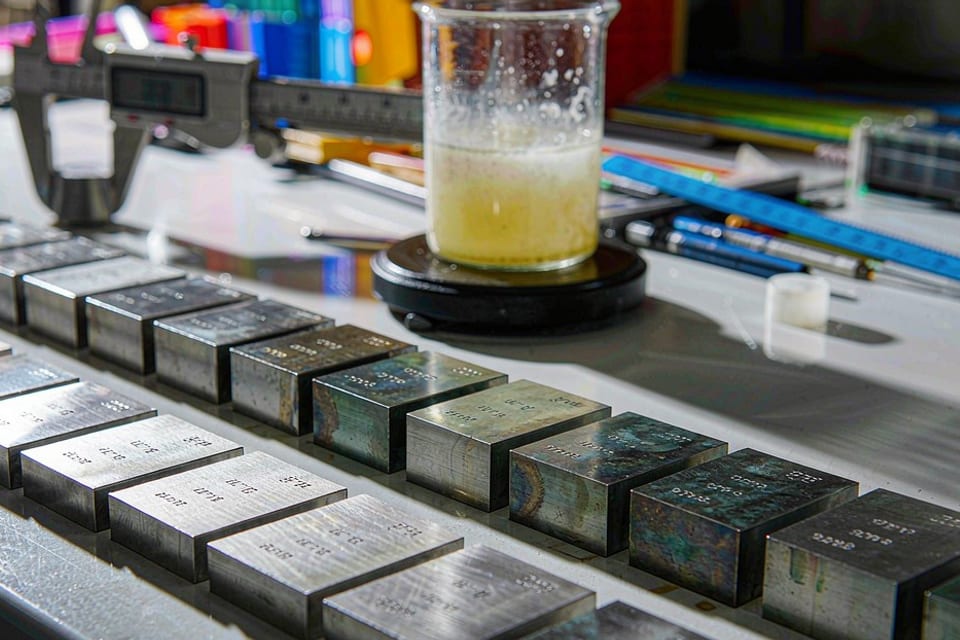
List of selected parts for five locations
| Location / Part | Recommended designation | Specification / Thickness | Surface | Main Failure Modes | Reference Standards |
|---|---|---|---|---|---|
| Sulfuric Acid H₂SO₄ 20–40% | 904L/254SMO | 2507 (over 50mm/a at 40%); 316L/317L severely corroded | 2507 corrodes over 50mm/a in 40% H₂SO₄ | Sulfuric Acid is not a strength of duplex stainless steel; high molybdenum austenitic/superalloy required for medium to high concentrations | ASTM A240; Corrosion charts |
| Hydrochloric Acid HCl 20% | C276/C22 | 316L perforates in about 3 days; 904L not suitable for long-term use in hydrochloric acid | C276 typically <0.1mm/a in HCl; 10% H₂SO₄, 80°C <0.1mm/a | Hydrochloric Acid requires nickel-based alloys; high molybdenum does not equal resistance to hydrochloric acid | ASTM B575; Haynes data |
| Phosphoric Acid H₃PO₄ (pure) | 904L/316L/317L (mild) | 444/304 inadequate in hot concentrated phosphoric acid | Corrosion curves: 444→304→316/317→904L | 904L is a common upgrade endpoint in phosphoric acid plants; further evaluate 254SMO when Cl⁻/F⁻ are present. | ASTM A240; corrosion maps |
| High chloride seawater / RO concentrate water | 2507/254SMO | 316L months pitting / SCC; 2205 narrow boundary at high temperature and high chloride | Concentrated saltwater Cl⁻ 60,000–80,000 ppm; 2507 CPT > 50°C, PREN 41–43 | 2507 is an economical high-corrosion-resistant choice for seawater desalination at high pressure; select 254SMO/6Mo when temperature and Cl⁻ exceed. | ASTM A240/A789/A182 |
| Wet flue gas desulfurization acidic wash solution | 2205/2507/254NM/AL-6XN | 304L/316L significant corrosion; rapid perforation at wet-dry interface | Corrosion rates: 2507 < 2205 < TA2 < 316L | By component classification: spray/scrubbing 2205/2507; inlet flue gas/tower lining 254NM/904L/AL-6XN | ASTM A240;DL/T 5196 |
See below forstandard configuration.The same part can be replaced with 304, 316L, or 2205 depending on the medium, temperature, and welding method —— specify usage conditions to save time.
Key material considerations
- The most common grades in this industry are 904L (2), 254SMO (2), and 2507 (2) —— parentheses indicate affected areas, useful for quoting and inventorying.
- Chloride ions and salts are the most common corrosion sources (pitting, fretting corrosion) (3/5 hits).
- Acid Media 316L Only Starts Here, Up the Concentration and Temperature to See 904L / Dual Phase (3/5 Hits).
Common Issues
Which Stainless Steel is Used Most in the Same Medium: Sulfuric Acid/Polyphosphoric Acid/Sulfuric Acid/Low Chloride?
Top 5 Parts by Occurrence: 904L (2), 254SMO (2), 2507 (2). Specific to a part still depends on the medium and temperature, e.g., stainless steel countertops require switching from 304 to 316L when exposed to saltwater.
Most Common Issues?
Typical Failure Modes: Wet FGD Acid Wash Solution. By Part Classification: Spray/Dehumidification - 2205/2507; Inlet Chimney/Tower Liner - 254NM/904L/AL-6XN; Recommended Grades 2205/2507/254NM/AL-6XN, Specified Corrosion Resistance. Dry/Wet Interface Penetration Fast. For these conditions, it's recommended to specify medium concentration, temperature, and cleaning method during the design phase.
Related Materials and Adjacent Industries
316LMaterials and Specifications2205Materials and SpecificationsStainless Fasteners: A2-70/A4-70/A4-80/D Series and Latest StandardsStainless FastenersWeld Neck Flanges for Seawater Desalination: 2205/2507 Pressure-Temperature-Corrosion BoundariesDuplex Flange & DesalinationSanitary Diaphragm Valves/Clean Valves: ASME BPE, Ra, and Temperature BoundariesSanitary Valves
Applications5