
C30 · Cement, Glass & Ceramic
Stainless Steel Plates for Non-metallic Mineral Products Industry (Cement/ Glass/ Ceramic): 310S/2535Nb Selection and List of Four Parts
In the non-metallic mineral products industry, we have organized four parts using stainless steel: commonly used 310S / 2535Nb / 304, with thickness ranging from 4–60 mm.
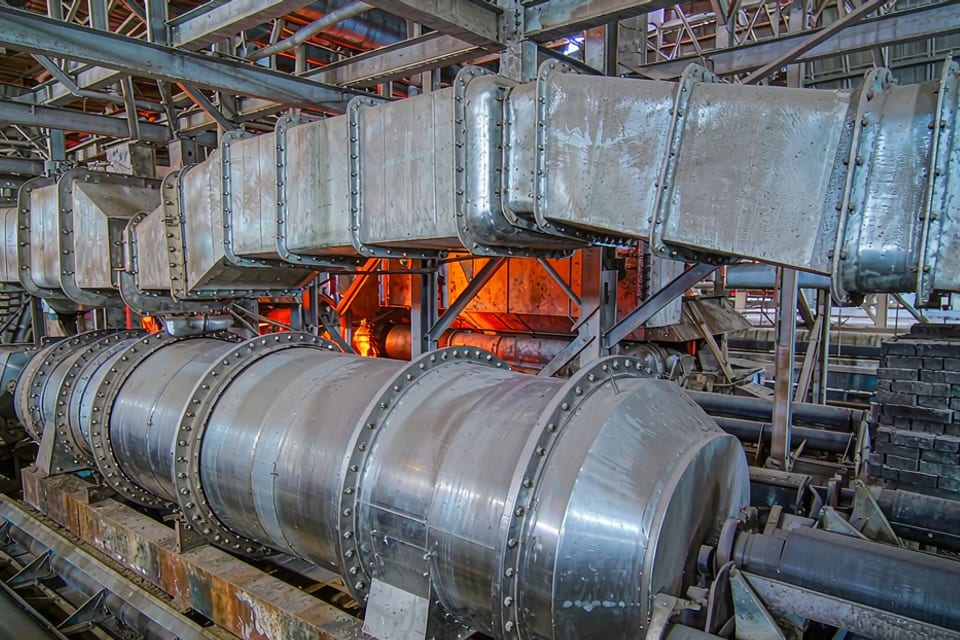
4 parts and material list
| Part / Component | Recommended grade | Size / Thickness | Surface | Main Failure Modes | Reference Standards |
|---|---|---|---|---|---|
| Clinker Cooler Grate/Chain Sintering Machine Grates | 2535Nb(ZG40Cr25Ni20Si2)/310S/ZG0Cr25Ni20 | 15–40mm thick | Cast Face/Finished Surface | 1100–1200℃ load + kiln dust corrosion + rapid cooling and heating low cycle fatigue; failure cases at 750℃, thickness of 15mm down to less than 10mm crack due to grinding | GB/T 8492;GB/T 3280 |
| Glass Melting Kiln Rolls/Radiant Tubes | 310S/314/Heat Resistant Castings | Roll Wall 8–30mm | Centrifugal Casting/Finished Surface | High temperature oxidation + glass melt erosion + thermal cycling cracking | GB/T 8492;GB/T 3280 |
| Ceramic Kiln Rolls/Bonding Materials | 310S/Heat Resistant Stainless Steel | Rolls φ20–60mm | 2B/Finished Surface | Thermal creep bending + thermal shock + glaze erosion | GB/T 3280;JC/T Ceramic Machinery Standards |
| Cement Screw Conveyor/Separator | 304/ Wear-resistant Welding | Blades 4-12mm | 2B/Overlay | Cement Mill Corrosion + Alkaline Corrosion | GB/T 3280 |
Inside isStandard ConfigurationMaterial selection
Consider usage conditions instead of grades
- Here are the most common grades: 310S (3), 2535Nb (1), 304 (1).
- High-temperature sections also stack hot fatigue and oxidation. Use 310S / heat-resistant castings (3/4 hit) if needed.
- Minimum thickness 4–60 mm: Thin plates are mostly formed parts (considering bend back-arc and deep drawing cracking), thick plates are mostly welded structures (considering heat input and sensitization).
Common Issues
Which stainless steel is used most in the non-metallic mineral products industry (cement, glass, ceramic)?
Total pages statistics show that 310S appears most frequently (3 times), followed by 2535Nb (1 time) and 304 (1 time). Specific to a part still depends on the medium and temperature, for example, stainless steel countertops require switching from 304 to 316L when exposed to saltwater.
What’s the most vulnerable part?
By failure description, typical is "Clinker Cooler Grate/Chain Clinker Cooler Grate": 1100–1200℃ load + kiln dust erosion + rapid cooling and heating low cycle fatigue; failure case at 750℃, thickness of 15mm reduced to less than 10mm before cracking. Recommended grade 2535Nb (ZG40Cr25Ni20Si2)/310S/ZG0Cr25Ni20, thickness 15–40mm. For this condition, it’s recommended to clearly specify medium concentration, temperature, and cleaning method in the design phase.
What thickness should I choose?
The range of thickness listed is 4–60 mm. Thin plates consider forming and surface quality, thick plates consider welding and structural strength; different manufacturers may have different values for the same part, review your drawings or conditions to confirm.
Related materials and adjacent industries
Applications4