
C21 · Furniture
Stainless Steel Plates for Furniture Manufacturing: 304/201 Selection and List of Four Parts
In furniture manufacturing, we have organized four parts using stainless steel: commonly used 304 / 201 / 304L, with thickness ranging from 0.8–5 mm.
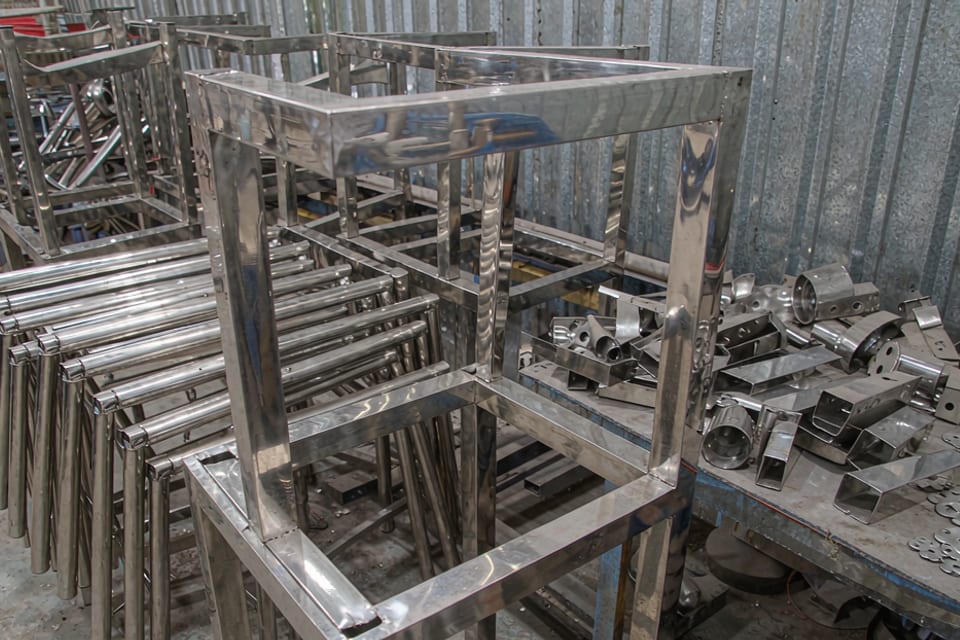
Four Parts and Selection List
| Part / Component | Recommended Grade | Size / Thickness | Surface | Main Failure Modes | Reference Standards |
|---|---|---|---|---|---|
| Hinges for Furniture | 304/201 | 1.8–5mm | Buff/Dome/Glitter | Repetitive Opening and Closing Wear + Sweat + Cleaning Agents; ASS 500h Grade 10 | QB/T 2189;GB/T 3325;QB/T 3827 |
| Three-Section Slides | 304/201 | 1.0–2.0mm | 2B/Plated | Repeated Pulling and Releasing Wear + Weight Deformation; Structural Strength 200N; ASS 500h 10 | QB/T 2454;QB/T 3827;QB/T 3832 |
| Handle/Latch Panels | 304/201 | 0.8–2.0mm | Brushed/Mirror/Glaze-Free | Frequent Touch + Sweat + Cleaner | GB/T 3325;QB/T 3827 |
| Stainless Steel Cabinets/Countertops | 304L/316L | 0.8–3.0mm | 2B/Brushed/Raised Texture | Moisture+Food Contact+Cleaning Agents; 99.9% Antibacterial | GB/T 3280;GB 4806.9;QB/T 4371 |
In Table isStandard ConfigurationSpecify usage conditions, it's easier to specify than the grade.
Key Considerations
- The most common grades in this industry are 304 (3), 201 (3), and 304L (1) —— numbers in parentheses indicate the number of parts involved, useful for quoting and material ordering.
- Consider hardness for worn parts (edges, liners, conveyors) beyond just corrosion resistance (2/4 hits).
- Frequent cleaning and disinfection can increase the risk of pitting and intergranular corrosion.
- Thickness range 0.8–5 mm: Thin plates are mostly formed parts (consider bending rebound and deep drawing cracking), thick plates are mostly welded structural parts (consider heat input and sensitization).
Common issues
Which stainless steel is used most in furniture manufacturing?
What parts are we counting by total pages?
Most common is 304 (3), 201 (3), 304L (1).
Which part has the most issues?
Typical issue: "Three-section slider": wear and deformation due to repeated pulling and loading; strength of structure 200N; ASS endurance 500h at level 10; recommended grade 304/201, size 1.0–2.0mm.
What thickness should we choose?
Thickness range in the list is 0.8–5 mm. Thin plates consider forming and surface quality, thick plates consider welding and structural strength; different manufacturers may have different values for the same part based on your drawings or operating conditions, review them accordingly.
Applications4
Thickness0.8–5mm