
C37 · Rail, Marine & Aerospace
Stainless Steel Plates for Rail, Ship, Aerospace and Other Transportation Equipment Manufacturing: 301L/304 Selection and 10 Part List
In rail, ship, aerospace and other transportation equipment manufacturing, we have compiled 10 parts that use stainless steel. Commonly used are 301L / 304 / 2205 with thickness ranging from 0.5–10 mm.
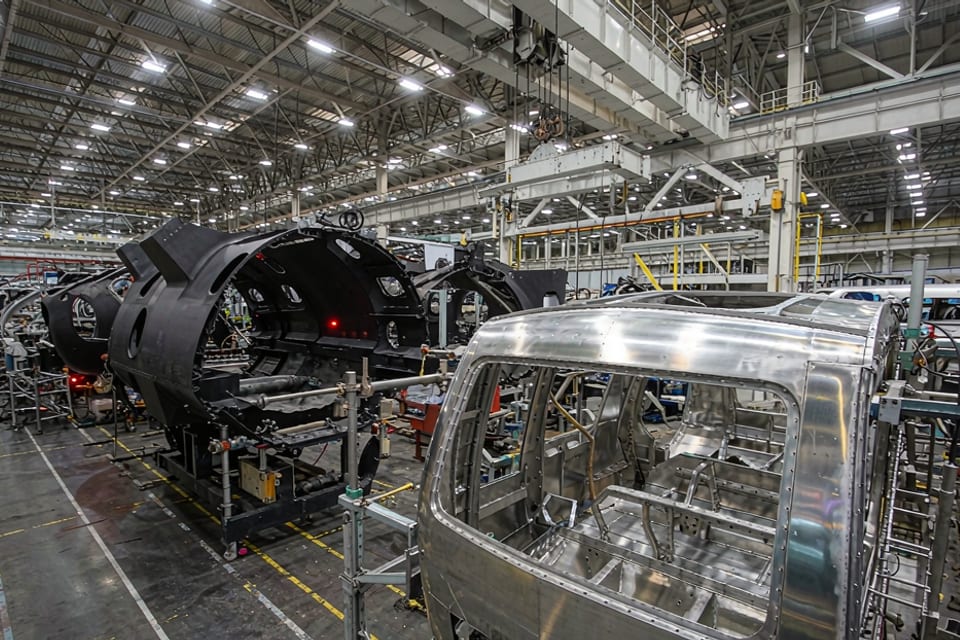
List of Ten Components and Materials
| Component / Part | Recommended Grade | Specification / Thickness | Surface | Main Failure Modes | Reference Standards |
|---|---|---|---|---|---|
| Body Side Wall (Welded Panel + Exterior Panel) | SUS301L(LT/DLT/ST/MT/HT) | Welded Panel/Exterior Panel 1–2mm; 2mm+2mm Double Weld Typical | Rustled / 2B | Laser Overlay Poorly Controlled Melting Depth → Fatigue Strength Insufficient; Welding Residual Stress; Weld Width ≥ 1 times Plate Thickness, Melting Depth ≤ 0.5 times Plate Thickness, Surface Protrusion < 0.05mm | EN 12663; Laser Overlay Patent Process |
| Body Cold Formed Channel Steel Beams / Pillars | 301L Cold Rolled Strip Steel | Strip 1–3mm | 2B / Rustled | Cold Forming Sag + Welding Deformation + Fatigue | EN 12663;GB/T 3280 |
| Interior Panels / Cargo Rails / Seat Frames | 304/301L | 0.5–2.0mm | HL/No.4/2B | Human Contact Corrosion + Cleaning Agents + Wear | GB/T 3280;EN 45545 |
| Doors / Window Frames / Sealing Elements Frames | 304/301L | 0.8–2.0mm | 2B / Rustled | Frequent opening fatigue + sealing strip aging + corrosion | GB/T 3280;EN 14752 |
| Ship exhaust gas scrubber tower body / spray layer | 2205/2507/254SMO/904L | 2–6mm | 2B/acid wash | Acid seawater pH 2–4 + high Cl⁻ + wear → pitting/electrochemical corrosion | ASTM A240; classification society requirements |
| Ballast water system piping / filters | 2205/2507/1.4529 | Wall thickness 2–10mm | Acid wash | High chloride seawater + stagnation + microbial corrosion | ASTM A240/A789; classification society requirements |
| Aircraft hydraulic / fuel lines | 304L/316L/21-6-9 | 1/8″–2″; wall thickness 0.5–2mm | Bright/dull finish | High pressure hydraulic oil + low temperature + vibration fatigue + coastal chloride | ASTM A269;SAE AS4076 |
| Engine exhaust components / tailpipes | 321/347/310S/nickel-based | 0.5–3mm | 2B/Polished | High Temperature Oxidation+Thermal Fatigue+Gas Corrosion | ASTM A240; AMS Aerospace Material Specifications |
| Aerospace Fasteners/Structures | A286/17-4PH | M3–M20 | Passivation/Treatment | High Strength+Stress Corrosion+Cryph+Fatigue | ASTM A453;AMS 5643 |
| Motorcycle Exhaust Systems/Bicycle Frames | 409L/304/430 | 0.8–2.0mm | 2B/Glazed/Treated | Condensation Acid Corrosion+Road Salt Fog+Vibration Fatigue | ASTM A240;GB/T 3280 |
Table BelowStandard Configuration. Same part can switch from 304 to 316L or 2205 based on usage conditions, which is more convenient than specifying grades.
Material Selection Tips
- Most common grades in this industry are 301L (3), 304 (3), and 2205 (2)— the numbers in parentheses indicate how many parts they apply to as a starting point for quoting and material procurement.
- Chlorides and salts are the most common corrosion sources (pitting, crevice corrosion) (4/10 hits).
- Wear components (edges, liners, conveying pieces) need hardness consideration, not just corrosion resistance (2/10 hits).
- Minimum thickness 0.5–10 mm: Thin plates are mostly formed parts (considering bend back-arc and deep drawing cracking), thick plates are mostly welded structural parts (considering heat input and sensitization).
Common Issues
Which stainless steel is used most in railway, shipbuilding, aerospace, and other transportation equipment manufacturing?
Top 10 by frequency: 301L (3 items), 304 (3 items), 2205 (2 items). Specific to a part still depends on the medium and temperature, for example, stainless steel countertops that contact salt water should switch from 304 to 316L.
Which parts are most prone to problems?
By failure description, typical is "body side wall (corrugated plate + exterior plate)": improper laser overlay weld penetration → insufficient fatigue strength; residual welding stress; weld width ≥ 1 times plate thickness, fusion depth ≤ 0.5 times plate thickness, protrusion < 0.05 mm; recommended grade SUS301L (LT/DLT/ST/MT/HT), specifications corrugated plate/exterior plate 1–2 mm; typical overlay welding of 2mm + 2mm. This condition recommends specifying medium concentration, temperature, and cleaning method in the design phase.
What thickness should I choose?
The listed thickness range is 0.5–10 mm. Thin plates consider forming and surface properties, thick plates consider welding and structural strength; different manufacturers may have different values for the same part, review your drawings or conditions to confirm.
Related materials and adjacent industries
304Material and specifications2205Material and specifications304LMaterial and specifications316LMaterial and specifications321Material and specifications430Material and specificationsAgricultural and food processing industryFood ProcessingFood ManufacturingFood ManufacturingManufacturing of Wine, Beverages, and Specialty TeaBeverage & Brewing
Applications10